
Strengthening Grenada’s Soursop Industry: A Collaborative Effort
March 26, 2026
CAHFSA coordinates the CARICOM Committee of Chief Veterinary Officers Meeting and VIIth CaribVET Steering Committee Meeting in St. Eustatius
April 9, 2026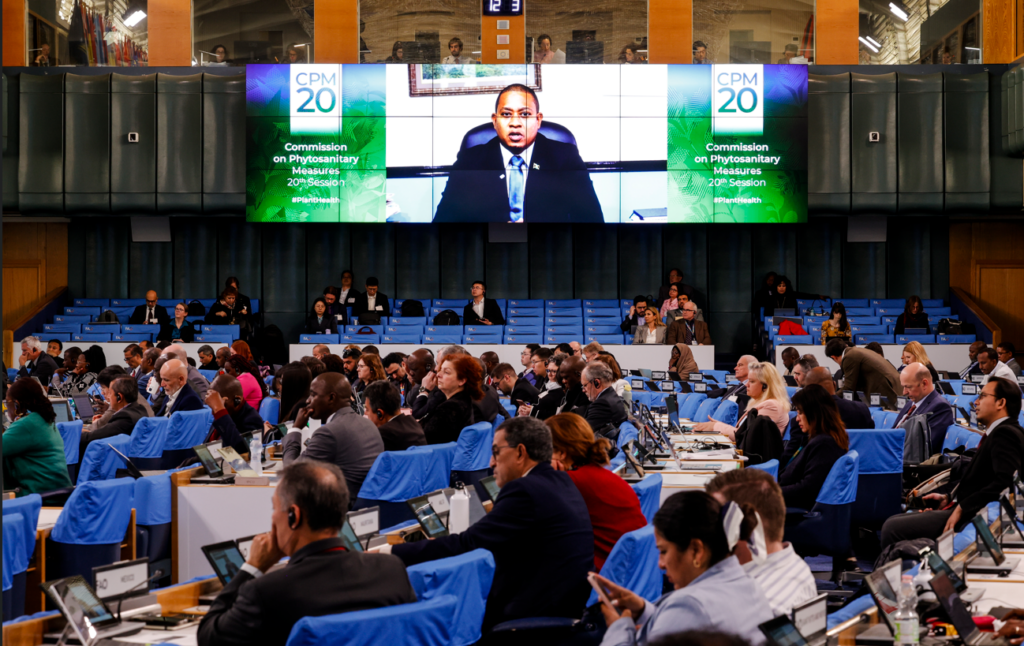
Fostering Plant Health for Safe Provision of Food and Humanitarian Aid
The theme, “Fostering plant health for safe provision of food and humanitarian aid” was
aimed at increasing awareness, building capacity and fostering collaboration for the safe
delivery of humanitarian aid that protects plant health and supports resilient agricultural
systems.
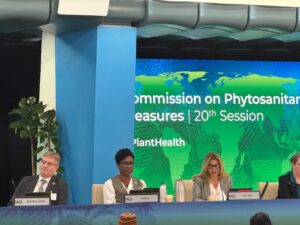
During CPM-20, on March 12, 2026, a science session was held, led by the International Plant
Protection Convention secretariat and the Commission on Phytosanitary Measures (CPM)
Focus Group on Safe Provision of Food and Humanitarian Aid. CPM-20 stressed the
importance of delivering humanitarian aid rapidly, while minimizing the risk of introducing
plant pests that could further undermine fragile agricultural and environmental systems.
The session was organized into a high-level segment, introduced by FAO Deputy Director
General Beth Bechdol, followed by a technical segment, introduced by the IPPC secretary.
The Deputy Director-General, setting the scene for the high-level segment, emphasized the
need to follow the “do no harm” principle and the importance of preparedness, building
stronger capacities, working together across borders, and ensuring that the people that are
already most at risk are protected from unintended consequences of plant pest
introductions.
Several speakers from FAO and the Codex Alimentarius Commission delivered presentations
during the technical segment. The Caribbean Community featured in this session with a
presentation from The Honorable Floyd Green, Minister of Agriculture, Fisheries, and Mining
of Jamaica. Minister Green described Jamaica’s response to Hurricane Melissa in October
2025. He explained how rapid risk assessments, rapid categorization of plants and plant
products based on their respective risk profiles and waivers for permit and inspection fees,
enabled swift aid entry. It is important to note that phytosanitary integrity was maintained.
Minister Green stated, “Disaster response must never compromise biosecurity but rather
reinforce the very structures that underpin national resilience”.
Ms. Juliet Goldsmith, Plant Health Specialist of the Caribbean Agricultural Health and Food
Safety Agency reported cases of live tree frogs, mite-infested seedlings, contaminated grain
and woodborer-infested pallets crossing borders through the delivery of aid. She emphasized
the need for pre-agreed emergency phytosanitary protocols, uncompromised traceability,
post-entry surveillance and full National Plant Protection Organization (NPPO) integration in
national and regional disaster management systems.
In closing, the IPPC secretary highlighted the need to shift the perception of phytosanitary
measures to see them as “guardians of food security” rather than as a potential “barrier”, and
the fundamental importance of international collaboration, preparedness, awareness
raising and capacity building to this work. The secretariat also looked ahead to the
development of the ISPM on safe aid, while acknowledging all participants and speakers for
their insights and contributions.